Estonian film startup secures funding to develop a unique casting platform

The film and media industry is changing rapidly. Technologies are evolving, workflows are shifting, and the ways content is created are being redefined. This transformation is creating entirely new opportunities for entrepreneurs.
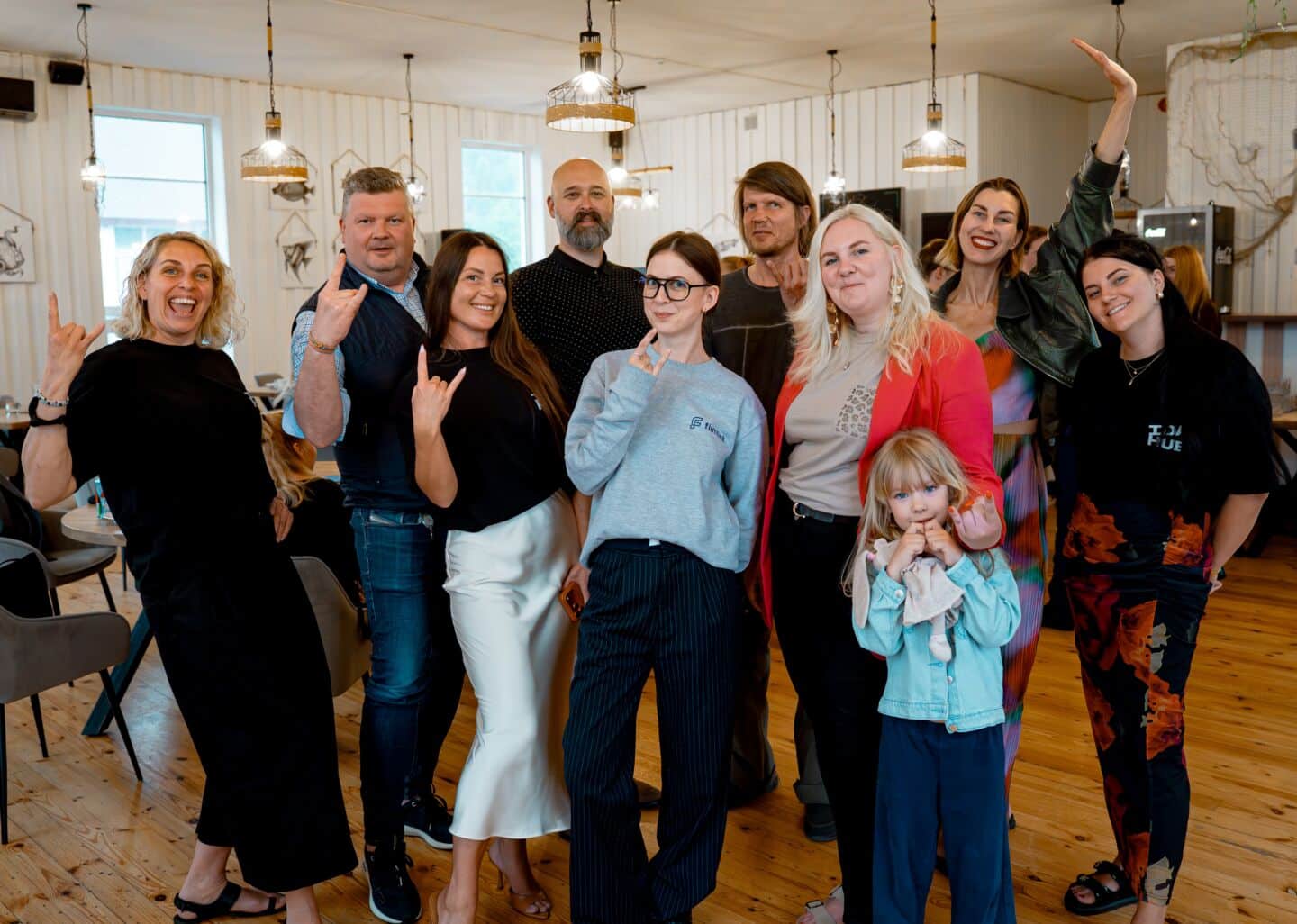
This was exactly the focus of the Founder2Founder Summer Meetup, organized by Tehnopol’s Film and Multimedia Accelerator, which brought startup founders, mentors, industry experts, and representatives of the entrepreneurial ecosystem together in Toila. The evening centered around one key question: Which problems are worth solving today in order to build Estonia’s next internationally scalable companies?
The evening opened with remarks from Film and Multimedia Accelerator program manager Olga Kurdovskaja, who encouraged participants to think about how ongoing changes in the film and media industry are creating new entrepreneurial opportunities, and how today’s challenges could become tomorrow’s success stories.
Next, accelerator mentors Kaur Kallas and Ivar Krustok took the stage to discuss how artificial intelligence, virtual production, and new content creation tools are already reshaping film production and the day-to-day collaboration of creative teams.
According to Kaur Kallas, entrepreneurs currently have a unique opportunity to build entirely new solutions. In his view, Estonia should not focus on replicating what already works elsewhere on a smaller scale, but instead take advantage of this moment where the entire industry is undergoing rapid change and emerging technologies are creating space for new companies.
In his presentation, Ivar Krustok focused on how advances in AI are already impacting the media sector and why the biggest changes in the coming years will happen at the intersection of technology and creativity.
During the Startup Spotlight session, Film and Multimedia Accelerator startups IRIS Casting Ecosystem and FilmLink introduced their solutions.
Terje Ronja Kissa, founder of IRIS Casting Ecosystem, explained how casting workflows have changed significantly since the pandemic. While auditions previously took place mainly in studios, today more than 100 million self-tapes are submitted globally each year, and much of the workflow is still managed manually through emails, files, and spreadsheets.
IRIS aims to bring the entire casting workflow into one AI-powered platform that helps reduce administrative burden, streamline collaboration, and centralize the casting process into one unified environment.
FilmLink presented a solution designed to help film and commercial productions more quickly find filming locations, service providers, and production partners, making the overall production process significantly more efficient.
The presentations were followed by an active Q&A session where participants discussed international growth strategies, business models, the role of AI in creative processes, and how to scale highly specialized industry solutions into globally competitive companies.
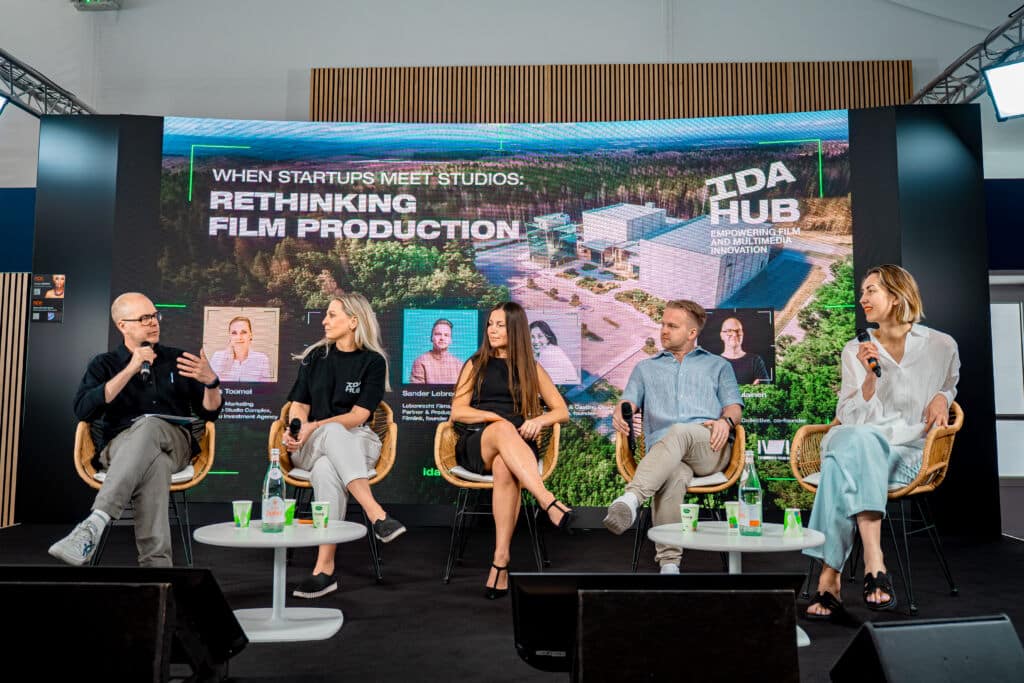
The Startup Spotlight session was followed by a panel discussion moderated by Anton Ossipovski. The conversation focused on how the film and media industry is changing, what opportunities these shifts create for startups, and what investors expect from companies operating in this space.
The discussion began with the question of what the biggest changes in the film and creative industries have been in recent years, and whether creative technology remains a niche sector in Estonia or is becoming the country’s next growth opportunity.
Startup Estonia Regional Startup Project Manager Elina Dubova noted that increasing attention is being directed toward creative and technology sectors in Estonia, while the role of IDA Hub in developing the region’s ecosystem is becoming increasingly important. According to her, initiatives like IDA Hub help connect entrepreneurs, educational institutions, and industry players while creating new collaboration and development opportunities in the region.
EstBAN board member and angel investor Martin Goroško encouraged people to look at film and creative technology startups as more than simply companies operating in the creative industries. In his view, these are technology companies solving real problems within the film industry, with strong international growth potential.
According to Martin Goroško, investors primarily look for strong teams, clear value propositions, large markets, and scalable business models. He also encouraged founders to speak more confidently about pricing, sales strategy, and financial projections, while viewing investor feedback as an opportunity to further strengthen their business.
The discussion also touched on why creative technology companies may face additional challenges when raising investment, and how important it is to find investors who understand not only technology, but also the specific nature of the film industry itself.
To conclude the panel discussion, Anton Ossipovski asked each participant to share one practical piece of advice for early-stage founders.
Elina Dubova advised entrepreneurs to focus as quickly as possible on finding their first paying customer. Kaur Kallas emphasized that once initial product development is complete, all energy should shift toward sales and market entry. Martin Goroško encouraged founders to think bigger and learn from investor feedback, as every meeting creates opportunities to improve and strengthen the business.
The ideas shared throughout the evening reinforced one central message: technology alone does not create change. The biggest opportunities emerge when technology helps solve real problems. It is from these kinds of solutions that Estonia’s next internationally ambitious companies can grow — a development actively supported by Tehnopol’s Film and Multimedia Accelerator.
The activities of Tehnopol’s Film and Multimedia Accelerator are funded by the European Union.